In an industry as demanding as the automotive sector, innovation does not depend solely on technology. It also depends on people who are capable of turning an idea into a real solution, working as a team to tackle complex challenges and maintaining excellence even under pressure.
At ARITEX, we experience this reality every day. Industrial projects require the coordination of very different disciplines, the integration of technical knowledge and tackling challenges that rarely have a single solution. That is why we particularly value initiatives that enable future engineers to tackle real-world situations even before they have completed their academic training.
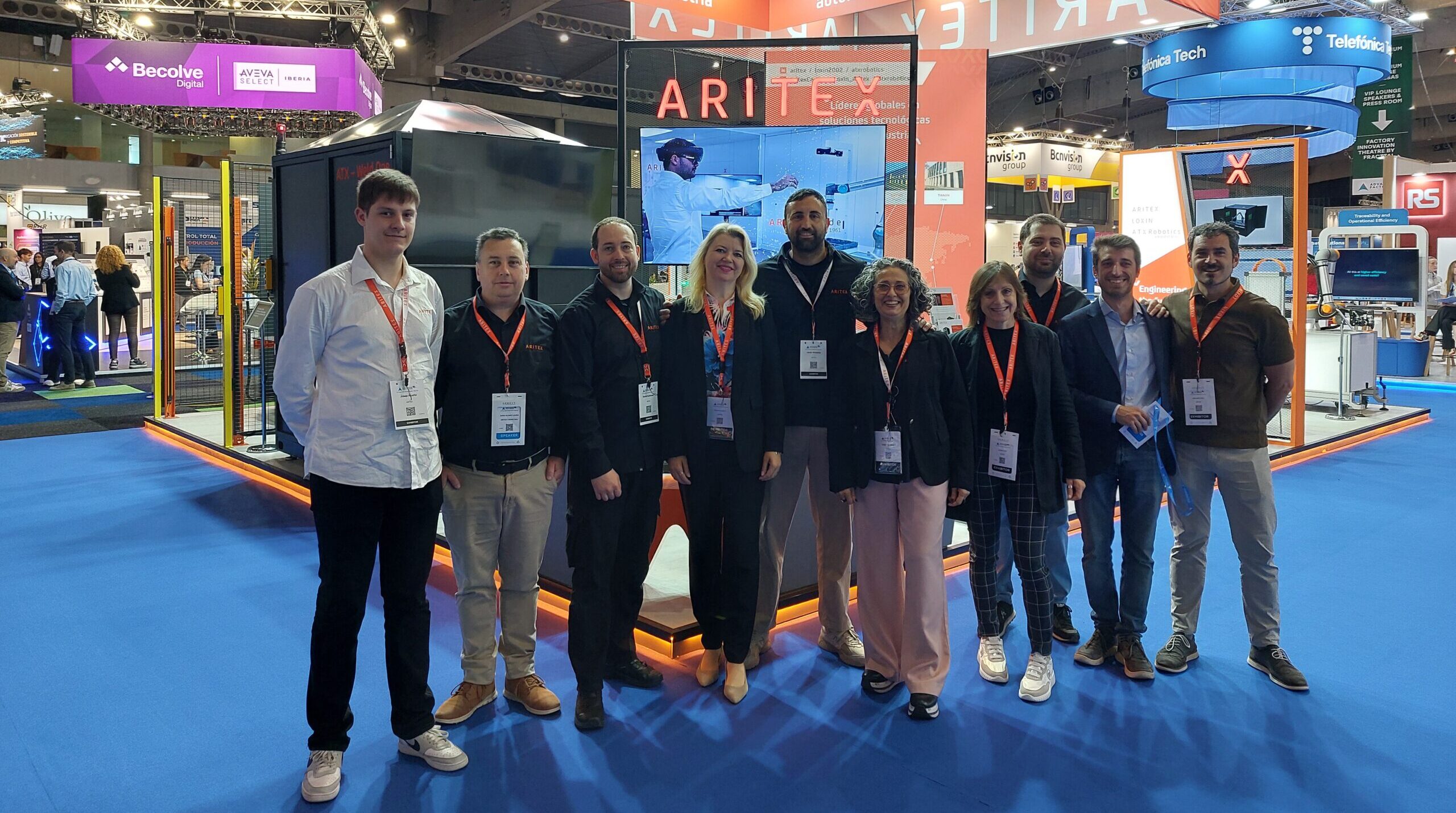
For the past three years, it has been our pleasure to provide support for e-Tech Racing, the Formula Student team at the Barcelona Est School of Engineering (Escola d’Enginyeria de Barcelona Est – EEBE-UPC). This experience has given us a close quarters insight into how some of the most sought-after skills in today’s engineering and automotive sectors are developed.
Much more than just designing a racing car
When people talk about Formula Student, it is easy to think of just competitive racing. However, behind every single-seater racing car lies a much more complex reality.
The students who form part of e-Tech Racing work in areas as diverse as electronics, battery management systems, simulation, aerodynamics, vehicle dynamics, systems integration, artificial intelligence and autonomous driving. Throughout the season, they design, validate, manufacture, test and optimise components that must subsequently function as a single system.
Viewed from an industrial standpoint, the parallels are clear.
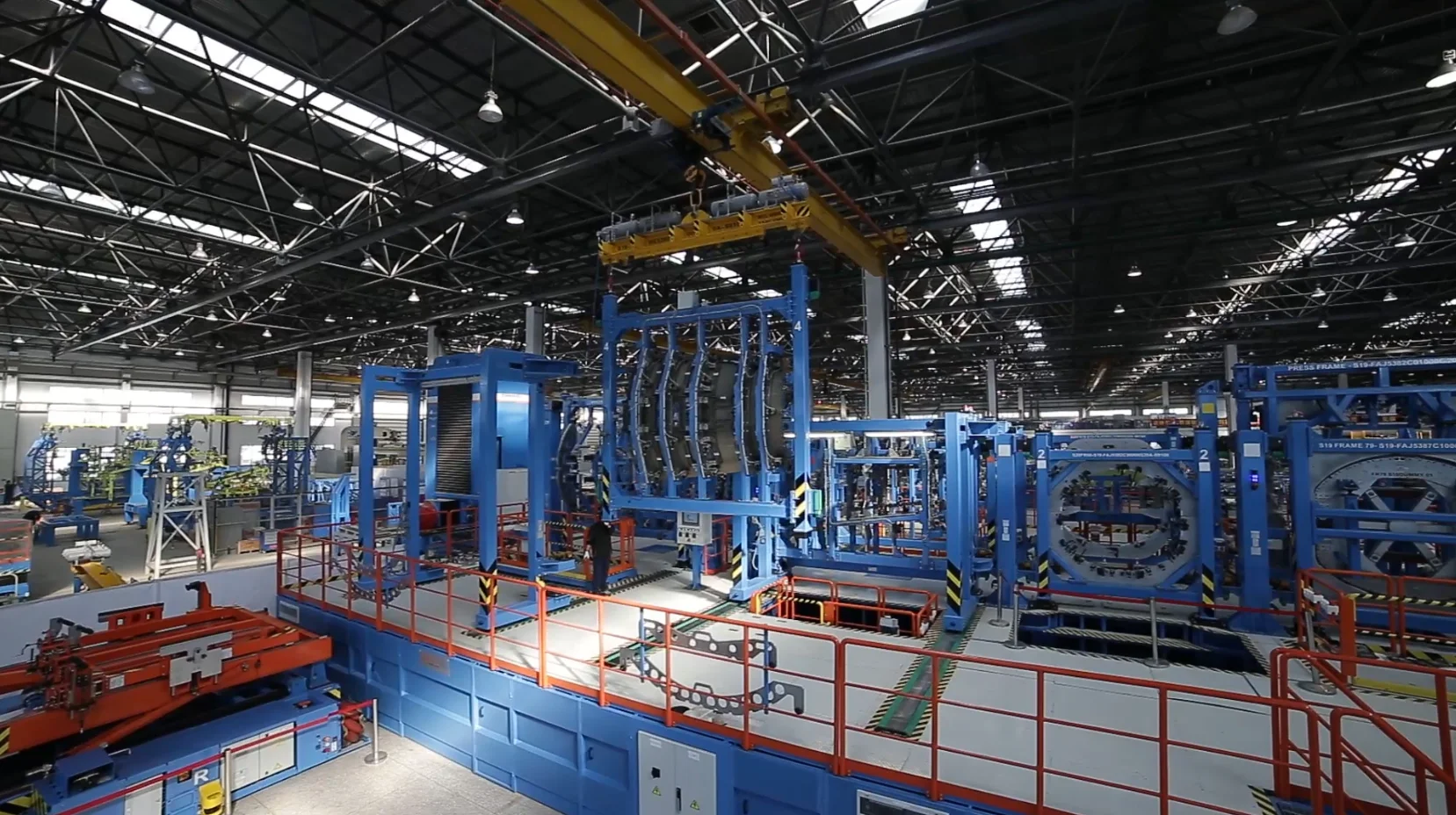
At ARITEX, we develop projects for car manufacturers that bring together disciplines such as mechanical engineering, electrical engineering, automation, simulation and software. Each area contributes a fundamental piece to the whole, but the success of the project depends on the ability to integrate them in a coordinated manner. This methodology forms part of our day-to-day work in industrial integration processes for the automotive sector.
The same applies at Formula Student.
A vehicle may incorporate extensive simulation work or an innovative electronic architecture, but if all the systems are not properly integrated, the end result will not meet expectations. Integration remains the true test of engineering.
When engineering becomes a vocation and a commitment
There is another aspect of this type of project that often goes unnoticed and which, in our view, is of immense value.
The members of e-Tech Racing juggle the development of the single-seater with lectures, academic work, work placements and exams. Even so, they devote a significant portion of their free time to the project. They take part in sessions covering manufacturing, validation, simulation, technical training and design reviews because they want to learn, improve and be part of a collective endeavour.
This reality reminds us that engineering is not built solely on technical know-how. It also requires curiosity, perseverance, commitment and a willingness to make sacrifices.
But there is an additional element that is particularly inspiring. Each student is responsible for a specific part of the project, although its ultimate success depends on how their work fits in with that of dozens of fellow students. The result does not belong to a single person; it belongs to the team.
In the professional world, exactly the same is true. The most complex challenges are rarely solved simply by applying what has been learnt from a textbook. They demand initiative, adaptability, a collaborative spirit and the willingness to keep on learning.

The value of building something together
Perhaps one of the most important lessons Formula Student offers is the realisation that individual success has a limited impact when working within complex systems.
An algorithm, an electronic circuit board, a structural component or a simulation only make sense when they form part of a system that functions correctly. This is a lesson that is difficult to learn in a classroom, but which is essential in any industrial setting.
Commissioning a production line requires constant coordination between specialists from different fields. Design, manufacturing, integration, programming, simulation, validation and quality are aspects that move forward in parallel and must remain aligned if the targets set for cost, deadline and performance are to be met.
That is why it is particularly valuable to see how these students learn, from such an early stage, a reality that will be commonplace in their professional future: the best results are not usually achieved individually, but collectively.
From simulation to reality
Another aspect that connects us most closely with projects such as e-Tech Racing is the importance placed on validation.
Throughout the season, the team works with advanced simulation tools, develops virtual models, validates electronic systems, carries out tests and analyses data before moving on to the physical manufacture and integration of components.
The automotive industry follows a very similar approach. At ARITEX, we use simulation and virtual validation to optimise processes, detect issues in advance and ensure that solutions work before their final implementation on the production line. In fact, engineering applied to the automotive sector demonstrates how simulation and virtual commissioning have become essential tools for reducing risks, optimising resources and improving the efficiency of industrial projects.
Technology is constantly evolving, but the principle remains the same: reducing uncertainty through knowledge, analysis and rigorous work.
An investment in the future of engineering
The automotive sector is undergoing an unprecedented transformation driven by electrification, digitalisation, automation and new mobility technologies.
In this context, the industry needs professionals capable of moving effortlessly between different disciplines, understanding complex systems and working together in multidisciplinary environments.

That is why initiatives such as Formula Student have a value that goes above and beyond competition. They represent spaces where learning comes through experience, where mistakes become opportunities for improvement and where teamwork takes on a very real dimension.
After three years of supporting e-Tech Racing, we continue to admire the commitment, dedication and passion that its members bring to every challenge.
Because, beyond the vehicle they build each season, what truly matters are the people who emerge from it: the engineers who will, in the future, help to design, integrate and optimise the solutions that will drive our industry forward.
The future of the industry is built by people capable of turning ideas into reality. Seeing the commitment and dedication of e-Tech Racing, we have no doubt that this future is in safe hands. At ARITEX, we will continue to support initiatives that help train the professionals who will drive the automotive industry of tomorrow.