When analysing a turnkey project once it has been completed, it is easy to focus on the results. However, much of its success will already have been determined long before this point: by how the strategy was defined, the implementation planned and key decisions taken from day one.
Working for major automotive and aeronautics OEMs has taught us that the difference between delivering a turnkey project and exceeding the customer’s expectations does not always lie in the technology used, but in the ability to innovate and the expertise applied to every decision.
What happens before, during and after a project has a decisive influence on the final outcome. Over the years, this accumulated knowledge has made experience a key criterion for decision-making, solution design and the execution of every project. This evolution explains much of the added value we provide today at Aritex.
Two sectors, two ways of understanding value
Although a great deal of knowledge can be transferred between the two fields, at Aritex, turnkey projects for the automotive sector and the aeronautical sector are not approached in the same way, because the specific needs of each customer are not the same.
In the automotive sector, the starting point is usually clearly defined. Both the customer and Aritex, as the integrator, have a clear understanding of the standards, technologies, level of automation and expected outcomes. In this context, the distinctive value lies not so much in reinventing the final solution as in executing it with precision, guaranteeing quality and ensuring that deadlines are met without fail.
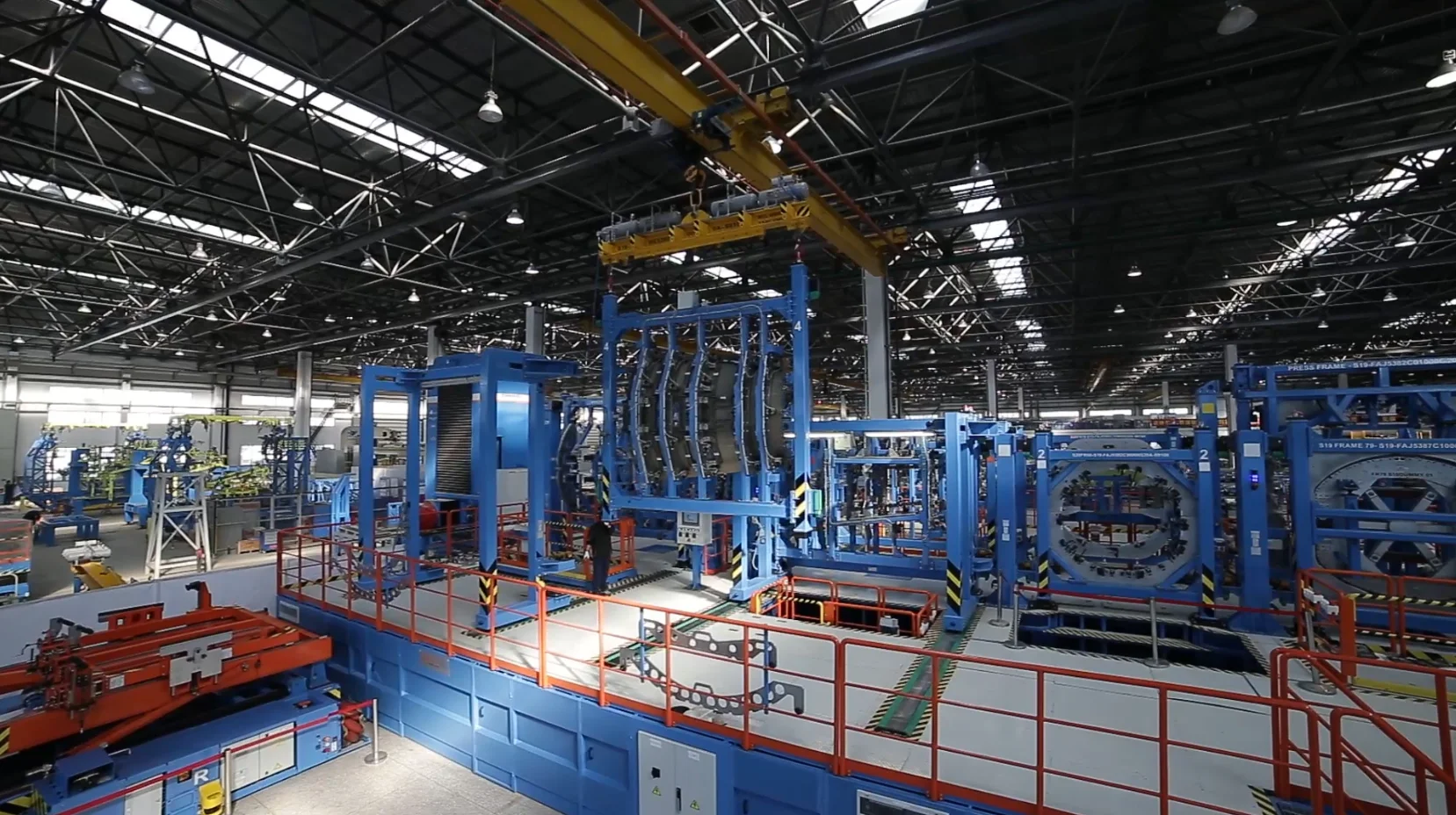
In the aeronautics sector, however, engineering plays a greater role. Each project may require a different degree of technical development, a specific adaptation to the product, a different level of automation or a solution tailored to the realities of each plant. Here, the difference lies in the ability to understand what the customer really needs and translate that into a coherent technical solution.
This contrast has been a source of learning. Our experience in the automotive sector has provided discipline in execution, planning and control. Our first foray into the aeronautics sector, which began with our first project in 2001, has strengthened our ability to adapt, engage in technical dialogue and develop flexible solutions tailored to each specific case.
Turning Experience into Effective Practice
One of the key lessons learnt in managing the varying complexity of engineering projects in both the aeronautics and automotive sectors has been to understand that success depends not only on the design, but also on how the entire process is planned and coordinated.
In greenfield projects, where a production line is developed from scratch, the key lies in defining the process correctly from the outset and executing it in an organised manner. In brownfield projects, where an existing production line needs to be adapted or improved, another skill comes into play: studying what already exists, understanding the previous process and integrating the changes with the least possible impact.
These lessons continue to be very useful. They teach us to work pragmatically, to make decisions with the project as a whole in mind, and to value engineering not only for what it designs, but for its ability to make execution feasible.
Planning ceases to be just a phase and becomes an advantage
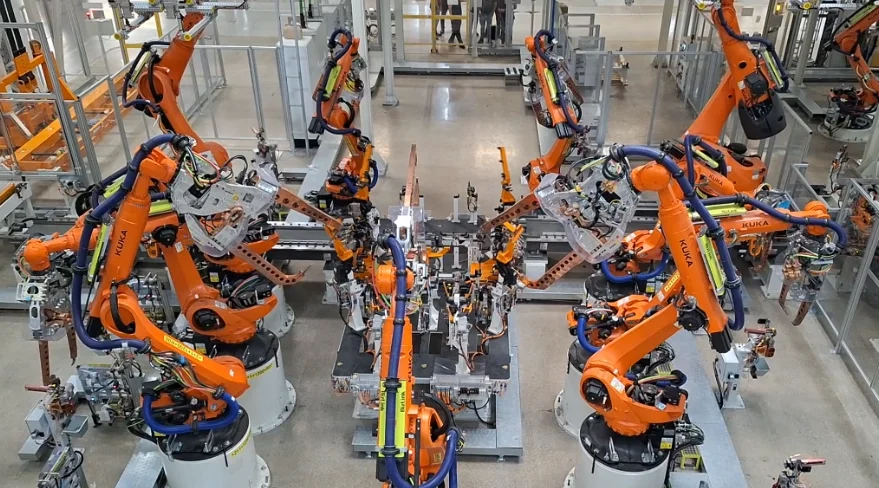
In the automotive sector, sound planning from the outset is key to our success. It is not just a question of organising tasks, but of building a realistic roadmap from the start, with a clear view of timelines, procurement, validations and commissioning.
This approach requires us to anticipate critical decisions, including long-lead items, design validations and project risks. With 65 years’ experience to draw on, we are certain that the better this preparatory work is carried out, the fewer subsequent corrections are required, the greater our ability to meet objectives, and the higher the level of customer satisfaction.
A recent example of this approach is Aritex’s involvement in projects associated with SEAT and Volkswagen’s Small BEV platform. Team coordination, detailed planning and the use of digital validation tools enabled us to successfully address different requirements at two separate plants, whilst maintaining a focus on the quality of execution and meeting deadlines.
The value of understanding customers
Whilst execution carries greater weight in the automotive sector, in aeronautics the key lies in defining the solution. Not because deadlines or costs are any less influential – the importance of these factors is always factored in and emphasised in our planning – but because the project demands a much higher level of alignment between requirements, design and validation.
At Aritex, we take a very clear approach in this regard: before deciding how to solve a problem, we must understand what the customer really expects. This includes their product, their plant or facility, their production rate, their budget, the way they work and their degree of industrial maturity.
Not all aeronautics production lines require the same degree of robotization. Not all draw on the same prior experience, nor can they be validated to the same standard in the early stages. This is why the value lies in adapting the available knowledge to each specific situation and proposing a solution that truly works within that context.
Innovation is not about taking risks systematically
In the aeronautics sector, too, the need to propose new solutions arises more frequently. However, at Aritex we do not view innovation as a blind gamble, but rather as a controlled evolution. When a solution has not been implemented previously with absolute certainty, the process requires prototypes, early testing and validation with the customer.
This approach allows us to move forward without compromising reliability. Innovation yields results when it is accompanied by learning, data and sufficient technical validation to reduce uncertainty before the final machine is produced.
Digital tools have changed the way success is achieved
Two decades ago, most decisions and adjustments were finalised during the commissioning phase. Today, digital tools make it possible to validate a large part of the project much earlier.
Advances in simulation, virtualisation and validation tools have transformed the way Aritex approaches turnkey projects.
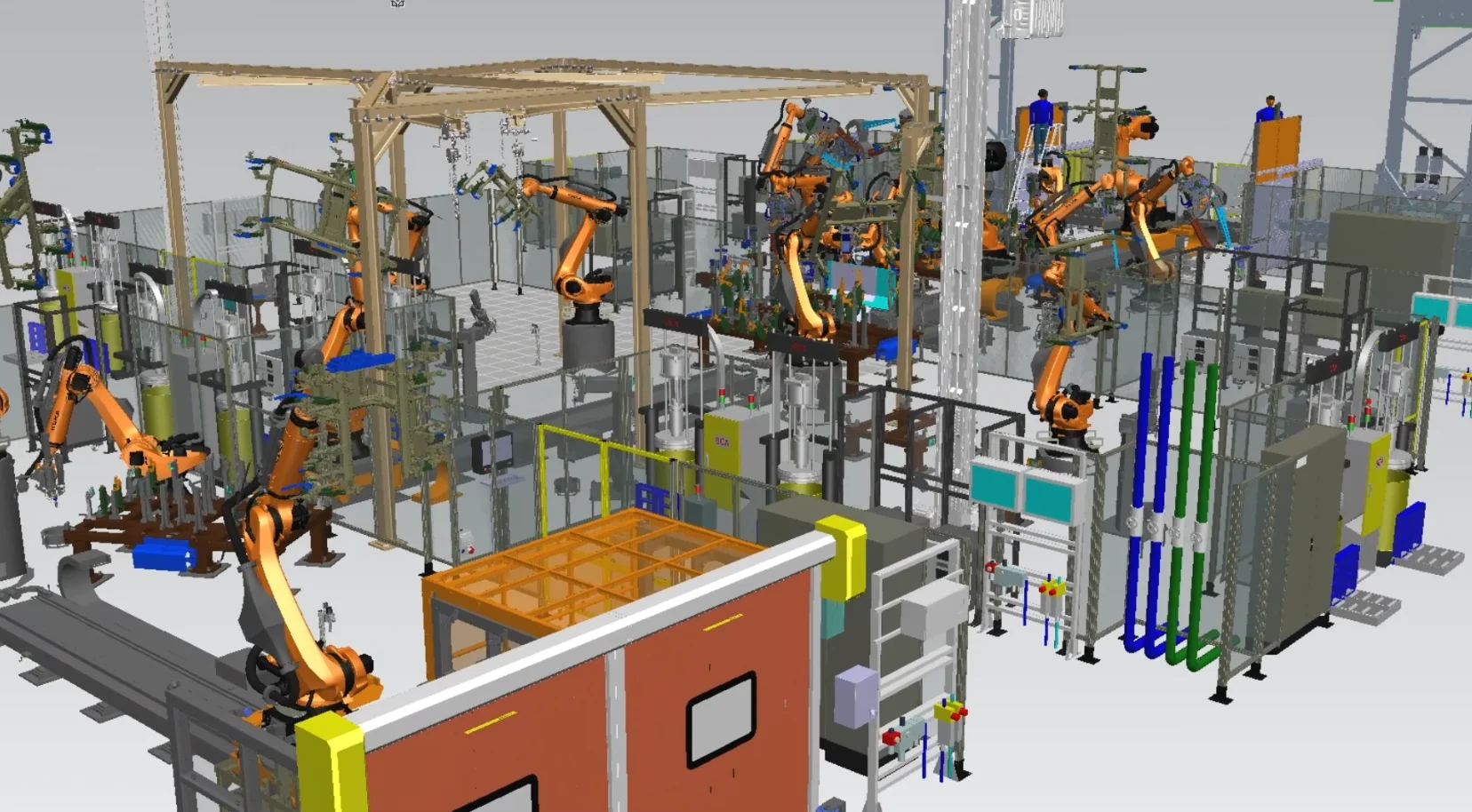
Today, much of what used to be resolved on-site can be validated before manufacturing even begins. Offline robot simulation, virtual PLC validation and the development of digital production line environments make it possible to check interferences, cycle times and design decisions at a much earlier stage.
This has reduced reliance on on-site modifications and placed greater emphasis on preliminary engineering. It has also changed the criteria for success: solid commissioning does not depend on good improvisation at the last minute, but on validating everything thoroughly beforehand.
In the automotive sector, this point is particularly important. Even when the customer does not require specific virtual environments, investing in them streamlines subsequent implementation. In aeronautics, whilst it may not always be possible to validate everything to the same standard, any preliminary testing that brings the actual production line closer to expectations helps ensure a more robust commissioning process.
The team’s overall vision matters just as much as specialisation
At Aritex, we understand that for a project to move forward, departments need to work together. Engineering, procurement, production, assembly, programming, project management and customer relations are all part of an interrelated system, from the tender stage right through to final delivery.
This means that decisions cannot be made based solely on a narrow perspective. A drawing is not good simply because it is well drawn. A purchase is not good simply because it fits within budget. A solution is the right one when it helps the project to progress coherently, and this requires professionals with experience, flexibility, communication skills and a holistic view.
At Aritex, moreover, this need is amplified by the international scope of many projects. Working across different countries, offices, languages and cultures can be either an obstacle or an advantage. For us, it is an undeniable advantage, as it enables a smooth flow of information and a very close relationship with the customer. This diversity becomes a real asset in better understanding the context, gaining experience, being more open to different points of view, avoiding misunderstandings and streamlining the phases of the turnkey project.
The key factors that distinguish a standard delivery from a successful project
At Aritex, we highlight three fundamental elements in our turnkey projects:
1. Judicious planning from day one
A solid definition of the project from the outset allows us to anticipate risks, optimise timelines and ensure smooth execution, particularly in the automotive sector where each phase depends on the previous one.
2. Integrated teams with a holistic view of the project
Effective coordination between engineering, procurement, production, assembly and project management is key to ensuring that every decision contributes to the overall objective, rather than merely to a partial optimisation.
3. Ongoing engagement with the customer to get the solution right
Constant dialogue with the customer enables us to align expectations, validate technical decisions and ensure that the final solution truly meets their industrial needs, in both the automotive and aeronautics sectors.
At Aritex, turnkey projects are not seen as a closed product or a one-off delivery, but as a shared process. An approach first developed in the automotive sector and subsequently consolidated in aeronautics and other sectors, in which industrial expertise, technical judgement and close collaboration with the customer enable us to transform an industrial need into a reliable, efficient solution that is ready to deliver results from day one. And, at the same time, to turn every project into an opportunity to continue learning, improving and tackling new challenges with greater confidence.