Working at the Aritex offices in Tianjin
David, Project Manager for Aritex China, is now working on the second final assembly line for the Airbus A321 aircraft in Tianjin. His process of adaptation started with daily challenges like learning how to use order delivery apps and services in Chinese. “To start with, everything was strange: the language, the food, the culture… There’s an air of mystery and exoticism that surrounds everything. But you get used to it all over time and your surroundings start to feel like home”, says David.
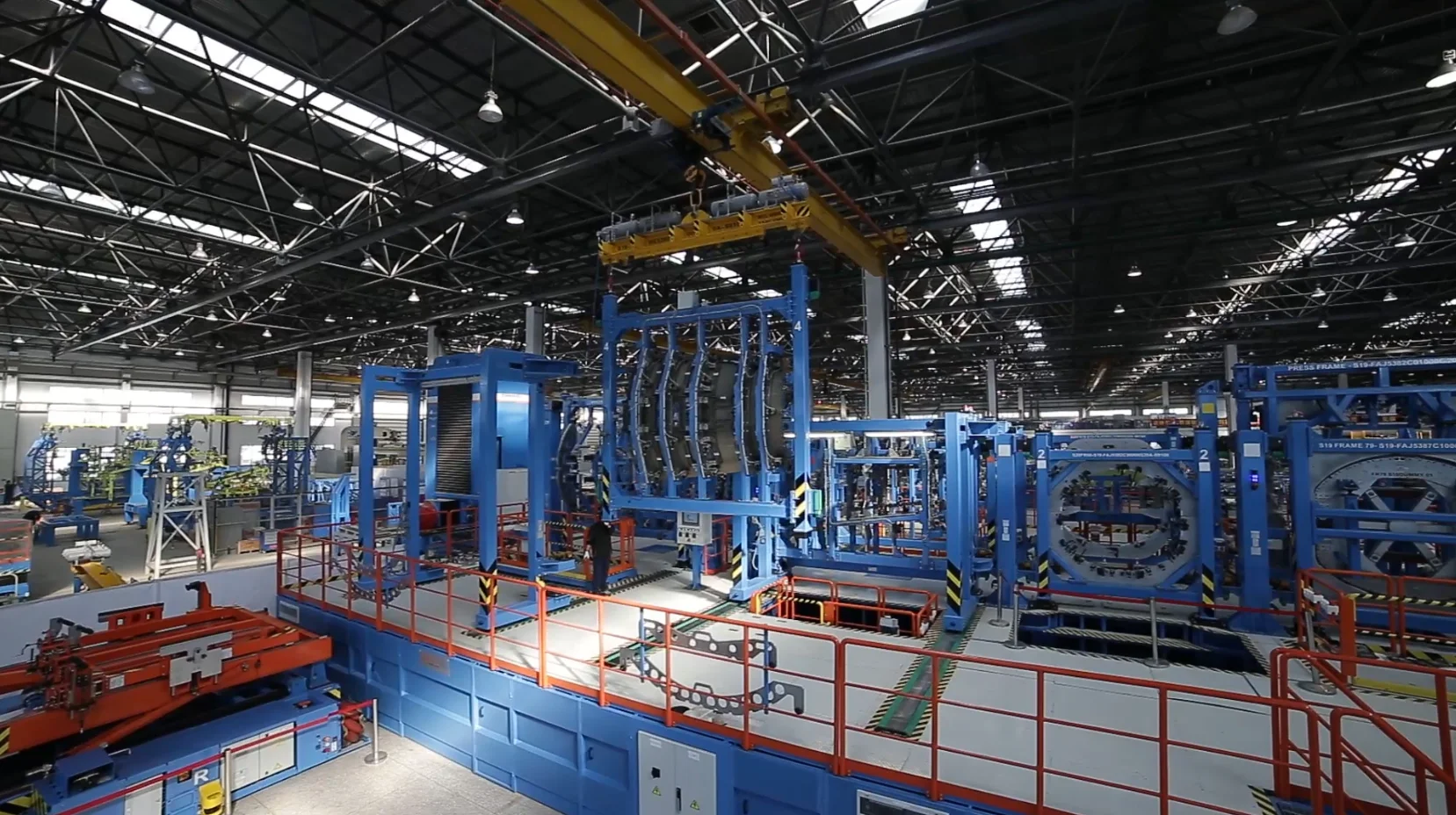
View of the Aritex offices in Tianjin, China.
What once looked distant and mysterious now forms part of his day-to-day life. “This new state of normality give you freedom and lets you see the world from a more open and global perspective”.
One thing that David likes about his new posting is how space is organised at the new office in Tianjin, where about 20 people work together. A collaborative layout that facilitates direct communication between departments — purchasing, engineering, assembly — and one that fosters team work aligned with a common objective. The diversity of profiles creates an atmosphere where close supervision encourages learning and growth amongst the entire team.
One thing that David appreciates in the engineering process is that manufacturing and assembly are closely monitored and of very high quality. He also likes the relationship with suppliers, who he considers to be professionals with a strong commitment to high quality standards. The SQE (Supplier Quality Engineer) also contributes by directly supervising processes at the suppliers’ facilities. Such detailed monitoring helps to ensure that quality and efficiency are maintained throughout the project.

The value of crossing frontiers
Crossing the planet is often an excuse for finding oneself. Who am I when nothing is familiar? How do I react in the face of uncertainty? David and Fermín both agree that adapting has also meant having to make an effort and discover unwritten codes, learn rituals and open up to new ways of thinking and working. They both represent the type of global professional that Aritex is looking for: people with solid careers, able to grow in very different environments.
Working with Asian teams enabled David to discover the value of attentive listening and the importance of giving clear and concise instructions.
In a setting where leadership is more informal and decisions are centralised, Fermín has developed a greater capacity to listen and be more flexible. “It’s important to understand how things are done and adapt to that. This experience helps you to identify what aspects need to be improved and what attitudes you should avoid. It’s also an opportunity to get to know yourself better, and even though the workplace and relationships outside work can help, learning to be with yourself is also a part of the process of growth”.
 View of Aritex headquarters in Tianjin, China.
By conceding control to gain greater vision, they have both built a more complete, resilient and international professional identity. “Being abroad, adapting and living with other cultures change you. You start to see the world more openly and with greater flexibility, and that stays with you forever”, says David. Fermín agrees: “Although I work in one particular country, the experience is very complete because I collaborate with teams in Barcelona, Mexico and Brazil. That’s given me a broader vision of the resources and capacities we have here, and that’s something I’ll definitely put into practice when I come back. This experience is definitely enriching my professional career”.
Shared cultures: what remains when everything changes
Aritex promotes a culture that fosters periods abroad as opportunities for growth. When we asked them what they valued most about this initiative, they agreed that it goes way beyond the purely technical. For David, the experience “offers you personal freedom, it opens up your perspectives and enables you to understand how to tackle tasks using different approaches”. Fermín adds: “I’ve developed new soft skills and learnt a lot in both technical and personal terms”.
After spending time abroad, one becomes more aware, versatile and complete. And that’s the aim behind the international experiences in Aritex: training profiles that evolve to transform the sector, working in teams that learn to create new solutions. In Badalona, Tianjin and São José dos Campos, there is something that stays with you: team spirit, connection and the will to build things together. A feeling that David sums up with a very Iberian expression: “Fem bona pinya*”.
* An expression in Catalan that means: “We make a good team”.